
Watch the Toothache Plant Video to learn more!
What is a Toothache Plant?
This plant is amazing. The recent studies about the use of the Toothache Plant show that it is a compelling candidate for novel anti-inflammatory use. Acmella is a small, herbaceous plant that belongs to the family Asteraceae.
The acmella oleracea is a small plant that has been used for over 2000 years to treat toothaches by chewing on its leaves. It is also commonly used in soups, salads, and sandwiches.
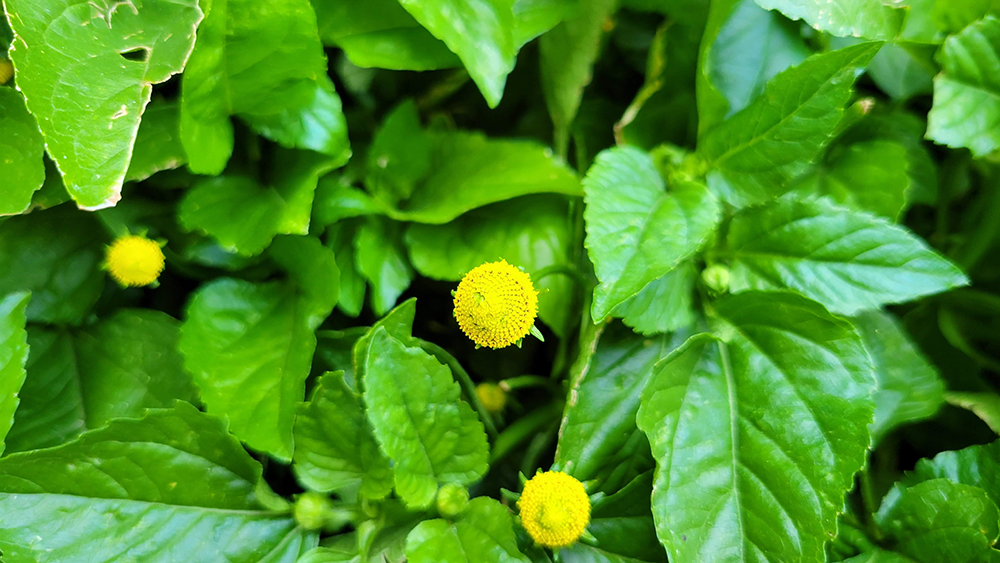
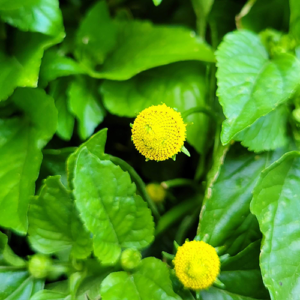
It is known to have wilting/turning down margins. It will turn yellow while it flowers. There are yellow or yellow/orange flowers that bloom during the fall season. Leaves are made of 5-9 obovate to oblanceolate leaflets which are covered in soft hairs. The acmella oleracea usually grows up to 12″ tall but can grow up to 24″. It grows up to 30 cm tall and has thin, green leaves and small, yellow flowers. The aerial parts of the plant are used medicinally.
The acmella oleracea can be found in the tropical and subtropical regions. It is usually grown as an annual plant, but it can also grow perennially if conditions are right for that to happen. This species is native to South America – Brazil (Mato Grosso) through Central America (Nicaragua) south to northern Argentina.
The acmella oleracea is a great plant to have in your garden because it will attract bees, butterflies, and hummingbirds. It is also deer resistant. This makes the acmella oleracea a valuable resource for pollinators. The acmella oleracea has been used as an herbal medicine for tooth aches (as the name suggests) and to treat fever.
It is also used as a sedative, cough suppressant, analgesic (painkiller), anti-inflammatory, antispasmodic among other things. However, the acmella oleracea should be avoided in pregnancy due to its abortifacient effects.
It has a variety of pharmacological activities. Its extracts and active metabolites have been shown to be effective against fungi, parasites, insects, and other microorganisms. They have also been found to be antioxidants, analgesics, and anti-inflammatory agents. Additionally, they may possess pancreatic lipase inhibitors and aphrodisiac properties. More research is needed determine the full extent of these plants therapeutic
What are toothache plant uses?
Research is still being conducted, but there are tons of uses for the Toothache plant. Acmella has been documented to show antimalarial to antioxidant to anti-inflammatory properties. Ethanol extracts of Toothache plant show promise in a variety of medicinal categories as we’re starting to research them.
The plant possesses various pharmacological activities, including antifungal, antipyretic, local anesthetic, bioinsecticide, anticonvulsant, antioxidant, aphrodisiac, analgesic, and pancreatic lipase inhibitor properties.
In addition to all the cool benefits, the obvious ones is that it helps increase salivation in the mouth. So if you have dry mouth, it’s great for temporarily alleviating dry mouth.
What do studies show about Acmella?
Acmella has also been shown to have antifungal properties. A study published in Phytomedicine found that extracts from the plant were effective against several types of fungi, including Candida albicans and Aspergillus niger. Another study published in the journal BMC Complementary and Alternative Medicine looked at the anti-inflammatory effects of Acmella extract. The results of this study showed that the extract was able to suppress inflammation by inhibiting the production of pro-inflammatory cytokines.
Various extracts and active metabolites from various parts of this plant possess useful pharmacological activities. For example, the methanolic extract from the leaves exhibited significant antifungal activity against Candida albicans, Trichophyton rubrum, Aspergillus niger, and A. fumigatus. The extract was also found to be effective against other fungi such as Penicillium chrysogenum, P. expansum, Rhizopus stolonifer, Mucor mucedo, and Fusarium solani.
The ethyl acetate extract from the leaves showed significant antipyretic activity in mice with fever induced by yeast suspension. The extract exhibited a dose-dependent reduction in body temperature and was comparable to the standard drug ibuprofen.
The methanolic extract of S. acmella flowers inhibited the growth of Staphylococcus aureus and Escherichia coli bacteria in vitro. The extract was also found to be effective against various Gram-positive bacterial strains including Bacillus subtilis, Enterococcus faecalis, Micrococcus luteus, and Staphylococcus aureus.
The powdered whole plant exhibited significant analgesic activity in acetic acid induced writhing model of nociceptive pain in mice. However the extract was found to possess a lower antihyperalgesic effect than morphine sulfate. The same study showed that oral administration (p.o.) of methanolic extract also exerted significant analgesic action on acetic acid-induced acute inflammatory pain in rats but it did not cause any sedation or lethality at high doses used for this purpose. Thus Spilanthes acmella can be considered as an analgesic agent.
The ethyl acetate extract of the leaves was found to be a potent bioinsecticide against Aedes aegypti, Culex quinquefasciatus, Anopheles stephensi, and Armigeres subalbatus mosquitoes. The extract was also effective against Tribolium castaneum, Rhyzopertha dominica, Oryzaephilus surinamensis, and Sitophilus oryzae beetles.
The methanolic extract of S. acmella flowers showed significant anticonvulsant activity in mice with pentylenetetrazole (PTZ) induced seizures. The extract protected animals from PTZ-induced convulsions and increased the latency period in aconitine-induced convulsions.
The ethanolic extract from leaves exhibited antioxidant activity against lipid peroxidation by decreasing malondialdehyde levels when tested with rat liver homogenate. In addition, it was found to possess cytotoxic effect on breast cancer cells (MCF-12A) at a concentration of 100 μg/ml. The same study showed that ethanol extracts from S. acmella leaves displayed anticancer properties in rats bearing Sarcoma 180 solid tumor xenografts for 21 days after treatment with 30 mg/kg body weight parenteral dose of leaf extract twice weekly for two weeks post-implantation followed by once every week until tumors grew to about 500 mg in weight.
Overall, Spilanthes acmella is an important medicinal plant with multiple pharmacological actions that include antifungal, antipyretic, local anesthetic, bioinsecticide, anticonvulsant, antioxidant, aphrodisiac, analgesic, pancreatic lipase inhibitor and anticancer properties. The plant is used in traditional medicine for the treatment of a variety of diseases and conditions. It has the potential to be developed as a new drug for the treatment of various infections and pain conditions. However, more research is needed to confirm these findings. More clinical studies are also required to evaluate the safety and efficacy of this plant before it can be recommended for use in humans.
What is Jambu Extract?
Jambu extract is a natural product that is made from the leaves of the acmella oleracea plant. It is known for its analgesic and anti-inflammatory properties, and it has been used to treat toothache and other dental problems for centuries. It has a citrus, tropical, musty or herbal flavor.
In a study published in the Journal of Natural Medicines, researchers found that jambu extract was able to reduce toothache pain by up to 87%.
What varieties of Toothache plant exist?
There are 2 main varieties of the plant. There is the red/yellow classic “bullseye” pattern and a solid yellow variety available.
Is toothache plant dangerous?
Toothache plant is not safe for lactating women, pregnant women, people who are allergic to daisy family plants, or people who are taking diuretics. The acmella oleracea can cause serious side effects in high doses and should be used with caution when pregnant or breastfeeding. Acmella oleracea should be avoided in pregnancy due to its abortifacient effects.
While the toothache plant has many beneficial properties, some people should avoid using it. Pregnant women should not use the toothache plant, as it can cause uterine contractions. Additionally, people with low blood pressure should avoid using the plant, as it can lower blood pressure even further.
What are the active components of toothache plant?
Spilanthol, triterpenes and other biologically active components have been isolated from the Toothache plant.
How does toothache plant feel?
When eaten, toothache plant feels like a buzzing in the mouth. It has a grassy taste and is quickly followed by a buzzing, cooling or tingling sensation in the mouth.
How do you grow Toothache Plant?
Start seeds indoors and allow the plant to develop a strong root system. Seeds don’t need to be separated and can grow very closely together. Once the roots are well established, break up the root balls into sections and plant them outdoors in the spring. Avoid frost. The acmella oleracea prefers a climate that is wet and cool. Acmella needs little water and should be given a wet and sunny position. It can also grow in the shade if it is protected from the midday sun.
Toothache plant (Spilanthes acmella) is an easy herb to grow in the garden. It thrives in full sun to partial shade and prefers moist, well-drained soil. Plants can be started from seed or from cuttings. Seeds should be planted in late winter or early spring. Cuttings can be taken any time of the year, but are best taken in the spring or summer.
Seeds should be planted in groups of three, with each group containing at least two different varieties. Seeds are generally sown on the surface of the soil and not covered up by more than a light layer of earth or potting media. The seeds will germinate within seven to ten days if kept moist but not wet. Seedlings can also be transplanted into individual pots once they have reached about six inches tall and begin showing their first true leaves. Once plants reach around about eight inch (20 cm) high transplant them again to larger containers (around 12-15 inch diameter).
Where can I buy Toothache Plant Seeds?
We have seeds in our store, see below!
- Display 9 Products per page
Where can I find Toothache Plant for sale?
The best way to grow toothache plant is from seeds. See our shop for more details!